Can You Deduct Office Supplies for Your Home Office? What You need to Know
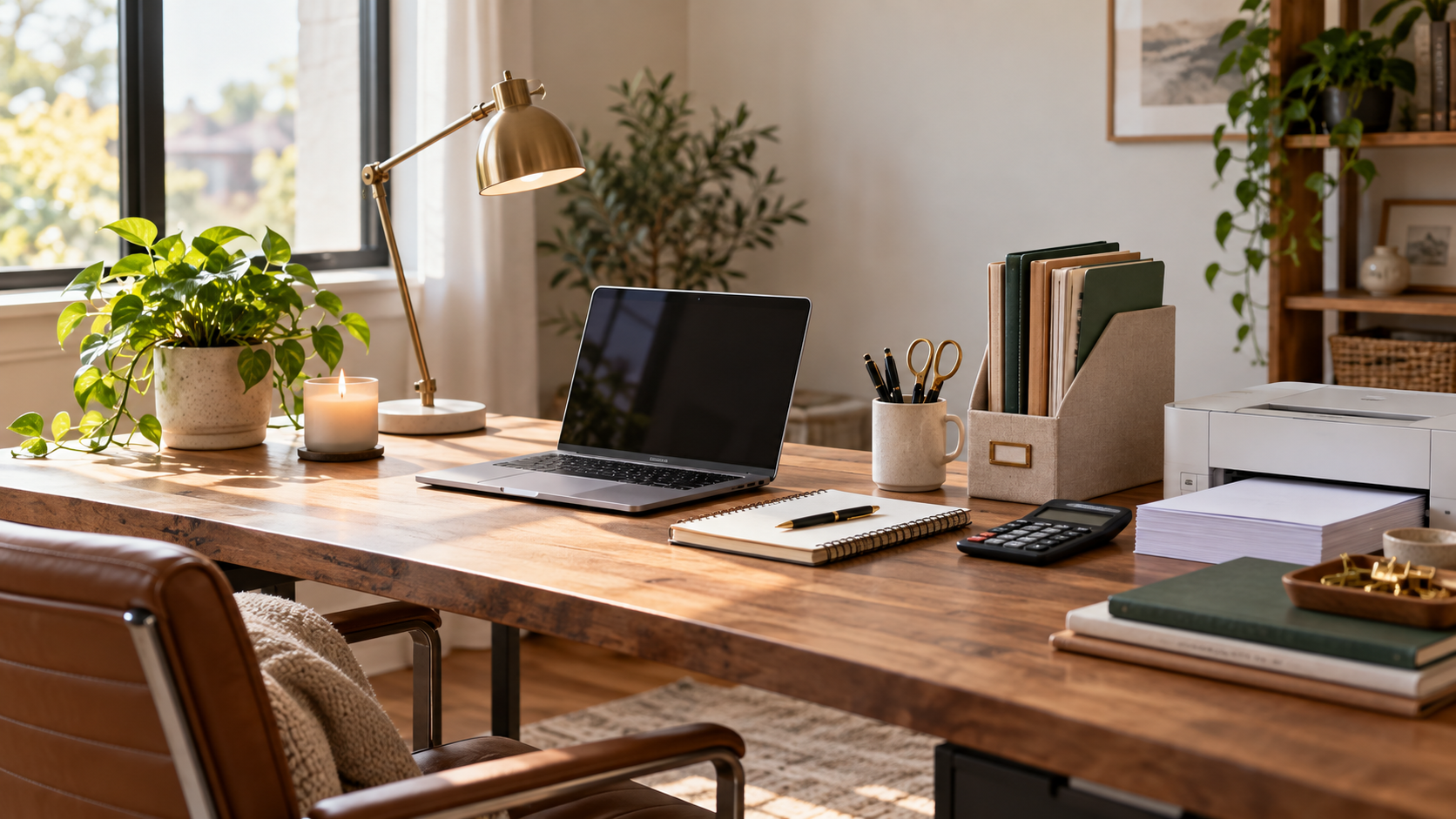
You've set up your home office, purchased a comfortable desk chair, stocked up on printer paper, and maybe even bought a candle to make the space feel a little more inviting.
Now comes the question: Can you deduct all of those purchases on your tax return?
The answer depends on what you purchased, how it's used, and whether it serves a legitimate business purpose.
Some purchases, like printer paper and pens, are straightforward. Others, like candles, artwork, plants, and coffee makers, require a closer look.
And here's something important: You don't necessarily need a qualifying home office to deduct ordinary and necessary business supplies.
Let's break down what generally qualifies, what might qualify, and what is probably a personal expense.
Do You Need a Qualifying Home Office to Deduct Office Supplies?
No. A qualifying home office is not necessarily required to deduct ordinary and necessary business supplies.
This is an important distinction that many self-employed individuals overlook.
The home-office deduction generally operates under Internal Revenue Code Section 280A. It allows qualifying taxpayers to deduct certain expenses associated with the business use of their residence.
Office supplies, however, are generally evaluated under IRC Section 162, which permits deductions for ordinary and necessary expenses incurred in carrying on a trade or business.
For example, imagine you're a self-employed real estate agent who works primarily from a brokerage office but occasionally prepares documents at home.
Even if you don't qualify for the home-office deduction, printer paper, pens, and other supplies purchased for legitimate business activities may still qualify as deductible business expenses.
The key distinction is between expenses of maintaining your home and expenses of operating your business.
What Office Supplies Are Generally Tax-Deductible?
Let's start with the easy ones.
Ordinary office supplies purchased for business operations are generally deductible, subject to the applicable timing and accounting rules.
Examples include:
Pens, pencils, and highlighters
Printer paper and notebooks
Printer ink and toner
File folders and binders
Envelopes and mailing supplies
Sticky notes and labels
Business stationery
Other consumable supplies used in the business
For example, assume you operate a bookkeeping business and spend $300 purchasing printer ink, folders, and stationery used exclusively for client work.
Those purchases would generally qualify as business expenses.
However, if you're purchasing supplies for both business and personal use, you should separate the business portion from the personal portion.
Key Point
You don't need a qualifying home office to deduct ordinary and necessary business supplies. Office supplies are generally business operating expenses, separate from the costs of maintaining your home.
Can You Deduct Office Furniture and Equipment?
Yes, but office furniture and equipment may follow different tax rules than ordinary consumable supplies.
For example, you might purchase:
A desk
An ergonomic office chair
Filing cabinets
Bookshelves
A computer or monitor
A printer or scanner
Office lighting
Other business equipment
These items may qualify as business property, but they're not necessarily deductible in the same manner as pens or printer paper.
What If You Purchase a $1,000 Desk?
Suppose you're self-employed and purchase a $1,000 desk used exclusively for your business.
The cost may qualify for an immediate deduction under an applicable tax provision or election.
For example, the IRS provides a de minimis safe harbor election under the tangible property regulations.
For taxpayers without applicable financial statements, the general threshold is $2,500 per invoice or item, provided the applicable requirements are met.
Businesses with qualifying applicable financial statements may have a $5,000 threshold.
However, the $2,500 rule isn't an automatic deduction for every purchase costing less than that amount.
Key Point
The $2,500 de minimis safe harbor is not an automatic deduction for every purchase below $2,500. Qualifying taxpayers must satisfy the applicable accounting requirements and make the annual election on a timely filed return. Other expensing and depreciation provisions may also apply.
The taxpayer must satisfy the requirements of the election, including consistent accounting treatment, and make the annual election on a timely filed return.
Other provisions, including depreciation and Section 179, may also apply depending on the property and business circumstances.
What If You Use the Furniture Personally?
Suppose you purchase a $500 office chair.
You use it for your business during the day but regularly use it for personal gaming in the evenings.
The chair has both business and personal uses.
You generally cannot deduct the entire purchase simply because it sits in your home office.
Instead, the business portion must be determined under the applicable rules.
Can You Deduct Candles, Plants, and Office Decorations?
Now we're getting into the more interesting expenses.
Imagine purchasing a $25 scented candle, a $40 plant, or a $100 piece of artwork for your home office.
Are those deductible?
Potentially, but these purchases are much more dependent on the business purpose and circumstances.
Under IRC Section 162, an expense must be ordinary and necessary in carrying on the taxpayer's trade or business.
An ordinary expense is one that is common or accepted in the particular business. A necessary expense is one that is helpful and appropriate for the business.
That doesn't mean an expense must be absolutely essential.
However, it does mean that simply enjoying a purchase while working doesn't automatically make it a business expense.
Example 1: A Candle in a Home Office
Suppose you purchase a $25 scented candle for your home office.
You work alone and burn the candle because you enjoy the fragrance.
In that situation, the expense has a substantial personal-enjoyment element, and the business deduction would be difficult to support.
Now imagine a massage therapist who uses candles to create an appropriate atmosphere for paying clients.
The therapist may have a much stronger argument that the purchase is an ordinary and necessary business expense.
The item is the same. The business purpose is different.
Example 2: Plants and Artwork
Suppose an attorney purchases artwork and plants for a professional office where clients regularly meet.
Those purchases may serve a legitimate business purpose by furnishing and presenting the client-facing office.
Depending on their nature and cost, the items may qualify for a deduction or need to be capitalized.
Now consider a self-employed consultant who purchases decorative plants for a home office used entirely alone.
The business argument may be weaker when the purchase is primarily for personal enjoyment rather than business operations.
However, client-facing use is not an absolute requirement for office furnishings to qualify. The overall facts, business purpose, and actual use matter.
Example 3: Office Lighting
Suppose you purchase a $75 desk lamp used exclusively to illuminate your work area.
That purchase generally has a more direct and identifiable business function than a scented candle.
Appropriate lighting can be a legitimate part of operating a workspace.
The applicable deduction or capitalization rules would still need to be considered.
What About Coffee Makers, Snacks, and Other Comfort Items?
This is another category that requires careful consideration.
Just because an item helps you feel comfortable or productive doesn't necessarily make it deductible.
Coffee Makers
Suppose you purchase a coffee maker for your home office because you enjoy having coffee while you work.
If the coffee maker is primarily for your personal consumption and convenience, the expense may be personal rather than a business deduction.
However, a coffee maker maintained in a professional office for clients may have a stronger business purpose.
Snacks and Beverages
Food and beverages are subject to special tax rules.
The fact that you eat lunch, drink coffee, or consume snacks while working from home generally doesn't make those personal food expenses deductible.
Certain qualifying business meals and employee-related food expenses may be deductible, but they have separate requirements and limitations.
Air Purifiers and Office Comfort
What about an air purifier or a small fan?
These purchases may have a legitimate business function when used for a business workspace.
For example, an air purifier used in a client-facing therapy office may serve a business purpose.
However, an air purifier purchased primarily for general household use or personal comfort presents a different situation.
The important question is whether the purchase is an ordinary and necessary business expense, and to what extent it is used for business.
Can You Deduct Items Purchased for Both Business and Personal Use?
Sometimes a purchase serves both purposes.
For example, you might buy a printer used 80% for business and 20% for personal activities.
Under the applicable business expense and property rules, you generally must account for the personal use rather than deducting the entire purchase as a business expense.
The same principle can apply to computers, furniture, and other equipment.
Example: A Printer Used for Business and Personal Activities
Assume you purchase a $400 printer.
You reasonably determine that 80% of its use is attributable to business operations.
The business portion of the printer's cost would be:
$400 × 80% = $320
That $320 represents the potential business basis or expense amount before applying the appropriate capitalization, depreciation, or expensing rules.
You should maintain records supporting your allocation.
A reasonable business-use estimate supported by actual records is much stronger than an unsupported percentage chosen when preparing the tax return.
Does the Simplified Home Office Method Affect Office Supplies?
Using the simplified home-office deduction method generally doesn't prevent you from separately deducting qualifying business supplies, furniture, or equipment.
Under the simplified method, qualifying taxpayers may deduct $5 per square foot of business-use space, subject to the maximum of 300 square feet and other limitations.
That method replaces the calculation of certain actual expenses of maintaining the home itself.
However, ordinary business expenses that are not expenses of maintaining the home may still be deductible separately.
For example, a sole proprietor who uses the simplified home-office method may still be able to deduct qualifying printer supplies, business software, and office equipment.
The simplified method does not convert otherwise personal purchases into deductible business expenses.
Which Home Office Purchases Are Tax-Deductible?
Not every purchase for your home office receives the same tax treatment.
Some purchases, such as pens and printer paper, are generally deductible business expenses. Others, including desks, computers, and office furniture, may be subject to depreciation or special expensing rules. And certain purchases, such as candles or decorations, depend heavily on their business purpose.
The table below summarizes how common home office purchases may be treated for federal income tax purposes.
For a sole proprietor, qualifying ordinary office expenses are generally reported in the appropriate expense categories on Schedule C.
Larger equipment purchases may require depreciation or an applicable expensing election.
Expenses associated with the business use of the home itself generally follow the Form 8829 or simplified-method rules when applicable.
S corporation owners also have separate considerations when purchasing business supplies with personal funds. Depending on the arrangement, the corporation may purchase the items directly or reimburse qualifying expenses through an accountable plan.
What Records Should You Keep?
One of the best ways to protect a legitimate business deduction is to document why an item was purchased.
For example, if you purchase a desk, save the receipt and document how it's used in your business.
If you purchase artwork for a client-facing office, maintain records supporting its business purpose and location.
For mixed-use items, maintain a reasonable allocation and the records supporting it.
Helpful documentation includes:
Receipts and invoices
Proof of payment
Description of the item's business purpose
Records of business versus personal use
Photographs of business furniture and equipment
Fixed asset records for capitalized purchases
Records supporting applicable tax elections
You don't necessarily need an elaborate tracking system for every pen or notebook.
However, purchases with an obvious personal-enjoyment component deserve closer attention.
Final Thoughts: Just Because It's in Your Home Office Doesn't Make It Deductible
Office supplies can be legitimate business tax deductions, but not every purchase belongs on your business tax return.
Printer paper, pens, and other consumable supplies used for business are usually straightforward.
Furniture and equipment may qualify, but the rules for deducting their cost can be different.
And items like candles, artwork, plants, coffee makers, and decorations require a closer examination of the business purpose.
Are You Overlooking Legitimate Business Deductions?
At Sharp Tax & Accounting, we help small-business owners identify deductible expenses, maintain accurate financial records, and develop practical tax-planning strategies.
Whether you're purchasing new equipment, setting up a home office, or trying to understand which expenses belong on Schedule C, we can help you evaluate the rules.
Dedicated to Being Sharp.
Sources and Additional Reading
Disclaimer: This article provides general tax information and does not constitute individualized tax or legal advice. The deductibility and timing of expenses depend on individual business circumstances and applicable tax law.